

How to clean stoneware bathroom tiles: the Emilgroup guide
21 agosto 2026
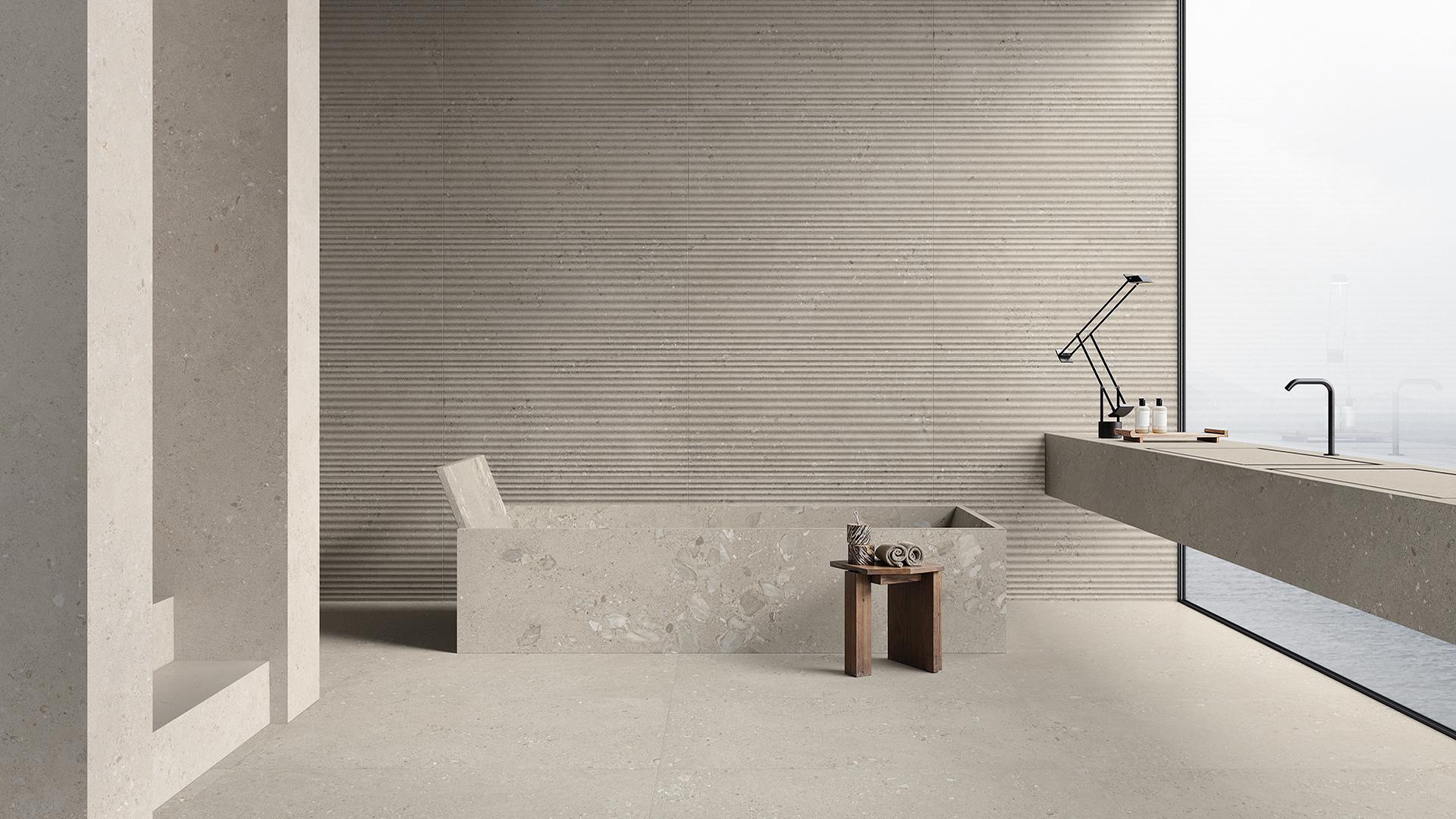
The bathroom is the room in the home most exposed to moisture, limescale, and soap scum, which tend to build on floors, wall tiles, and grout lines. Porcelain stoneware holds up very well under these conditions: it’s a durable, hygienic, and low-porosity surface that, with just a few simple precautions, stays beautiful over time.
In this article, we’ll look at how to clean porcelain stoneware bathroom tiles using the right products, regular cleaning, and non-abrasive tools.
Routine cleaning of bathroom stoneware tiles
Routine cleaning of stoneware bathroom tiles is simple, but it requires consistency: soap scum, water droplets, limescale, and moisture tend to build up, especially near the shower, bathtub, sink, and toilet.
For proper and quick maintenance:
- remove dust, hair, and debris before washing;
- use a mild detergent diluted in warm water or, for deeper degreasing, a degreaser following the manufacturer’s instructions;
- rinse with clean water to remove any product residue;
- dry areas most exposed to splashes, condensation, and standing water with a soft cloth;
- avoid abrasive sponges, rough cloths, stiff brushes, metal tools, waxes, and polishes.
How to clean glossy bathroom tiles
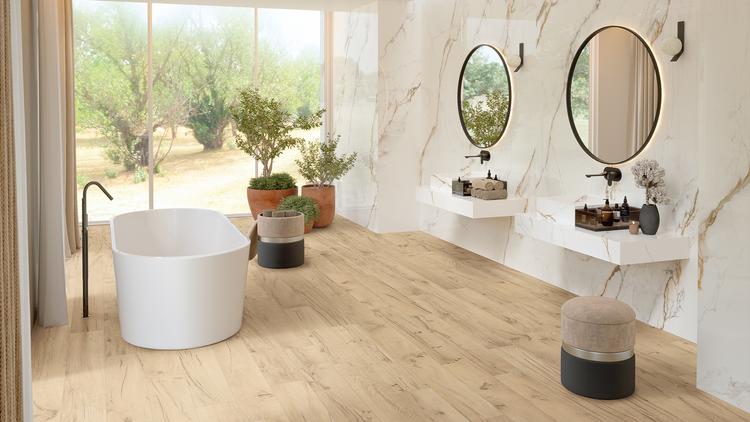
Glossy or lapped porcelain stoneware tiles enhance the brightness of the bathroom, as seen in the Tele di Marmo Lumia collection by Emilceramica, a marble-effect collection designed for striking and refined surfaces.
To maintain the shine of lapped tiles, simply follow routine maintenance procedures, including a final wipe-down near the shower and sink to prevent water spots and fingerprints.
No polishing products or wax-based substances are needed: the surface retains its luster on its own.
How to clean dull bathroom tiles
Matte or textured porcelain stoneware surfaces are highly popular in contemporary bathrooms for their natural and elegant look. They should be cleaned using the same routine maintenance methods, without polishing products, to preserve their uniform appearance over time.
How to clean bathroom tiles after installation
The first cleaning after installation is intended to remove grout residue, cement, and construction dust from floors, wall tiles, and grout lines: if not removed, these can leave stains that are difficult to remove.
Use acidic cleaners suitable for stoneware tiles, following the manufacturer’s instructions: dilute to 10%–20%, let sit for 7–10 minutes, and remove with non-abrasive tools.
The same approach is also effective for cleaning very dirty or encrusted tiles. After treatment, rinse several times with clean water, preferably warm.
On lapped, polished, or high-end surfaces, test the solution first on an inconspicuous area.
How to remove limescale and stains from tiles
Limescale builds easily in the bathroom due to water and steam, especially in the shower and near the bathtub, sink, and faucets.
The advantage of stoneware is that, because it is low porosity, limescale remains on the surface and isn’t absorbed: it can be removed with mild, compatible products, always rinsing thoroughly. It’s best to avoid harsh acids: vinegar and lemon should not be left on the surface for too long, while hydrochloric acid is dangerous and potentially harmful to surfaces, people, and animals.
| Problem | What to use | What to do |
|---|---|---|
| Light stains | Well-diluted neutral detergent | Wash, rinse, and dry with a soft cloth |
| Visible limescale | Mild limescale remover compatible with stoneware | Let it sit for a short time and rinse thoroughly |
| Prevention | Soft cloth or squeegee | Dry the shower walls after use |
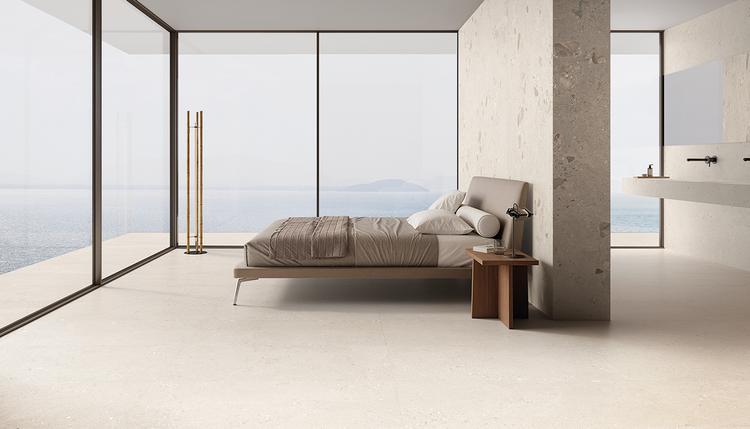
These simple steps help preserve the beauty of Emilgroup’s stoneware collections over time, from the stone-effect GemmaStone by Ergon to the wood-effect W-Circles by Provenza.
How to clean the grout between bathroom tiles
In the bathroom, the grout lines are the area that requires the most attention: it’s the grout between the tiles that traps moisture and residue, while the stoneware tiles remain unaffected. Regular cleaning keeps them clean and prevents dark stains or mold, especially in the shower, near the tub, and on the floor.
Here are the steps to follow:
- Remove surface dirt: Wipe with a soft cloth or a damp sponge.
- Apply a grout cleaner: Choose a cleaner that’s safe for porcelain tiles and grouts.
- Scrub and rinse: Use a soft brush, then dry.
To prevent mold and discoloration, ventilate the bathroom after showering, dry areas prone to moisture buildup, and clean the grout regularly.
How to clean shower tiles and grout
The shower is the area of the bathroom most affected by limescale, soap, and moisture, but stoneware handles it well: it’s resistant to water and cleaning products, so caring for it is simply a matter of regular maintenance.
To clean stoneware shower tiles, all you need is a neutral cleaner or a mild limescale remover, while a soft-bristled brush works well for the shower grout. On the floor-level shower deck, remove any residue immediately and avoid letting water pool. Above all, dry and air out the area after use: this is the best way to prevent mold and keep the stoneware looking its best over time.
FAQ about cleaning bathroom tiles
Can you use leave-on products on stoneware?
It's best to avoid them, especially in the bathroom: moisture, steam, and limescale can cause residue or streaks to appear. It's best to use mild detergents or diluted degreasers and always rinse thoroughly.
Are there any safe, natural ways to clean tiles without damaging the grout?
Yes, but with some caution: use warm water and mild detergent for daily cleaning; for light limescale, apply very diluted vinegar for a short time and rinse thoroughly. Avoid pure acids and bleach, which can damage the grout between the tiles with repeated use.
Does bleach damage bathroom tiles?
Porcelain stoneware is durable, but using bleach on it is not recommended for routine cleaning, especially if it is undiluted or used frequently. To preserve its appearance, opt for neutral cleaners or specific, compatible products.
How often should bathroom grout be cleaned?
Grouts should be checked regularly, especially in damp areas. In bathrooms that are used frequently or are poorly ventilated, it’s best to clean them more often.
Collections used in the project








Any Questions?
If you are looking for the ideal covering for your home or business or you have any questions about our collections, don’t hesitate to get in touch! Together we’ll find your perfect bespoke solution!
If you are looking for the ideal covering for your home or business or you have any questions about our collections, don’t hesitate to get in touch! Together we’ll find your perfect bespoke solution!
Enter the Emilgroup world!
Stay up to date with the latest news from the world of ceramics. Find out about our new collections, events and innovative applications of porcelain stoneware.