
Japanese garden paths: how to choose and install porcelain stoneware tiles
06 luglio 2026
Japanese garden paths are a practical and decorative way to create elegant walkways without covering the greenery. They give structure to the garden, while keeping the lawn, gravel, or sand visible.
This article focuses on porcelain stoneware tiles: how to choose the right slabs, which technical features matter outdoors, and how to install them on grass, gravel, or sand.
What are Japanese stepping stones and how are they used in the garden?
Japanese stepping stones are pathways formed by individual slabs or stones placed at regular intervals on grass, gravel, or sand. Unlike a traditional walkway, they don’t form a continuous surface, but a sequence of building blocks that follow the natural stride and allow one to cross the greenery without trampling it.
Japanese passing stones originated in traditional gardens, particularly in roji, the paths leading to the tea room. Here, isolated stones, called tobi-ishi, guided the way, protected the moss and damp soil, and invited visitors to slow their pace.
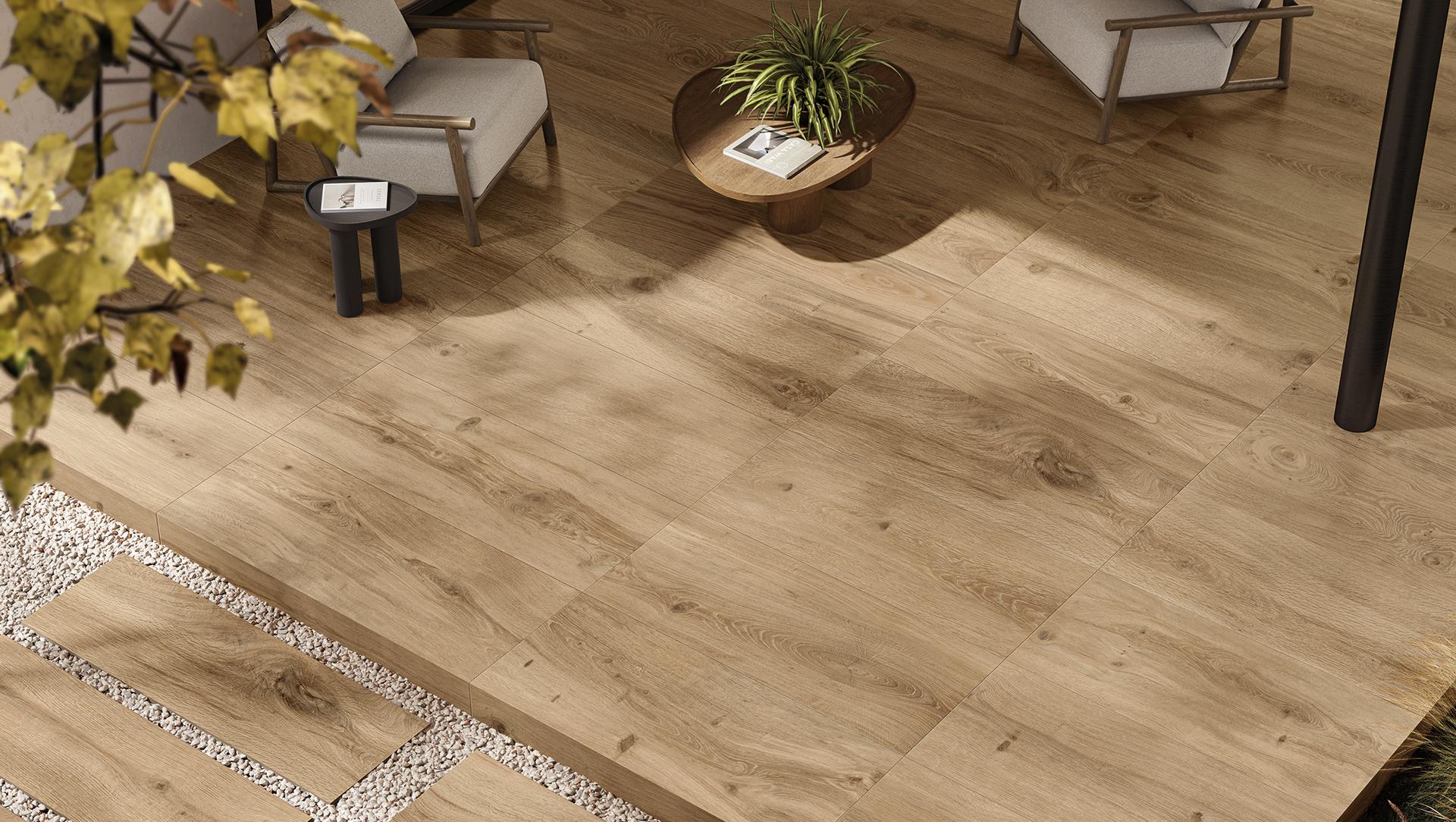
Today, irregular natural stone is often replaced by outdoor porcelain stoneware, which retains the aesthetic of stone flooring but offers greater durability, stability, and ease of maintenance. Porcelain stoneware garden path slabs can connect to the entrance, pool, barbecue, dining area, or flower beds, creating paths over grass, gravel, or sand.
Stone, concrete, wood, or terracotta effects enable you to adapt the walkway to the garden style, creating clean porcelain tile walkways that blend seamlessly into the plant life.
Thickness, traction, and frost resistance: technical specifications for outdoor garden tiles
To choose outdoor garden tiles it is important to consider thickness, frost resistance, and surface traction
20 mm thickness
The most suitable thickness for installation in direct contact with the ground is 20 mm as it ensures stability even without adhesive. Dry installation on compacted sand or gravel also offers the flexibility to easily remove or reposition the tiles if needed.
Frost resistance
Porcelain stoneware has very low water absorption - generally less than 0.5% - reducing the risk of damage caused by freeze-thaw cycles. Compared to some more porous natural stones, it is therefore more stable in outdoor areas exposed to rain, humidity, and temperature fluctuations.
Non-slip surfaces
For walkways exposed to rain or moisture it is advisable to choose outdoor surfaces with good traction. The R11 friction coefficient indicates high slip resistance with footwear and is the recommended class for Japanese-style garden paths.
How to install japanese steps: a practical guide
There are four steps to properly installing Japanese stepping stones:
- Plan the path
Determine the route from the gate to the entrance, leading to the pool, the barbecue area, or the relaxation area. Calculate the number of slabs based on the length of the path and the distance between each slab. For added comfort, leave a gap of about 5 - 6 cm between each slab - Prepare the substrate
When laying the base on soil you need a stable, well-draining foundation: dig down about 5–8 cm and lay down compacted sand or fine gravel. Proper ground preparation is the key to long-lasting, cement-free garden paving. - Laying the slab
The slab is usually laid dry, without adhesive. After positioning the slab, check that it is level and make sure it does not protrude beyond the lawn. - Blend in with the greenery
Moss, decorative gravel, or grass between the slabs to enhance the walkway. On a lawn, the 20 mm stoneware ensures stability and blends naturally into the greenery. Maintenance is simple: just water and mild detergent—no special or periodic treatments required.
Which Emilgroup collections should you choose for garden walkways?
The choice of finish allows you to create different effects in the garden:
- Stone Effect: inspired by shellstone, a marine sedimentary rock containing fossil fragments and marble inclusions, GemmaStone brings a naturally charming texture to the garden. Neutral tones ranging from warm beige to anthracite gray are ideal for contemporary gardens and poolside areas.
- Terracotta effect: perfect for those seeking rustic, traditional warmth. The warm colors create a welcoming atmosphere, ideal for courtyards, porches, and outdoor spaces with a Mediterranean feel.
- Wood effect: ideal for pergolas, relaxation areas, and warm-toned outdoor spaces. I-Wood reinterprets oak in porcelain stoneware, with textured grain and a natural aesthetic suited to outdoor spaces.
- Concrete effect: suitable for contemporary gardens, terraces, poolside areas, and outdoor spaces with clean lines.
FAQ about garden paths
What is the ideal thickness for Japanese stepping stones?
The recommended thickness is 20 mm, which provides stability, durability, and better installation options on various surfaces such as sand, gravel, or compacted soil.
Are porcelain tiles frost-resistant?
Yes, porcelain pavers are ideal for outdoor use because they have a very low water absorption rate, which reduces the risk of frost-related cracks.
Which slip-resistance class should you choose for garden walkways?
For garden walkways, it is advisable to choose surfaces with a slip-resistance class of R11 or higher, which ensure good traction even in the presence of water or damp soil. Always check the technical specifications for the specific collection you have chosen.
Collections used in the project

Related Articles


Any Questions?
If you are looking for the ideal covering for your home or business or you have any questions about our collections, don’t hesitate to get in touch! Together we’ll find your perfect bespoke solution!
If you are looking for the ideal covering for your home or business or you have any questions about our collections, don’t hesitate to get in touch! Together we’ll find your perfect bespoke solution!
Enter the Emilgroup world!
Stay up to date with the latest news from the world of ceramics. Find out about our new collections, events and innovative applications of porcelain stoneware.