

Tiling curved surfaces: the art of flexible design
02 febbraio 2026
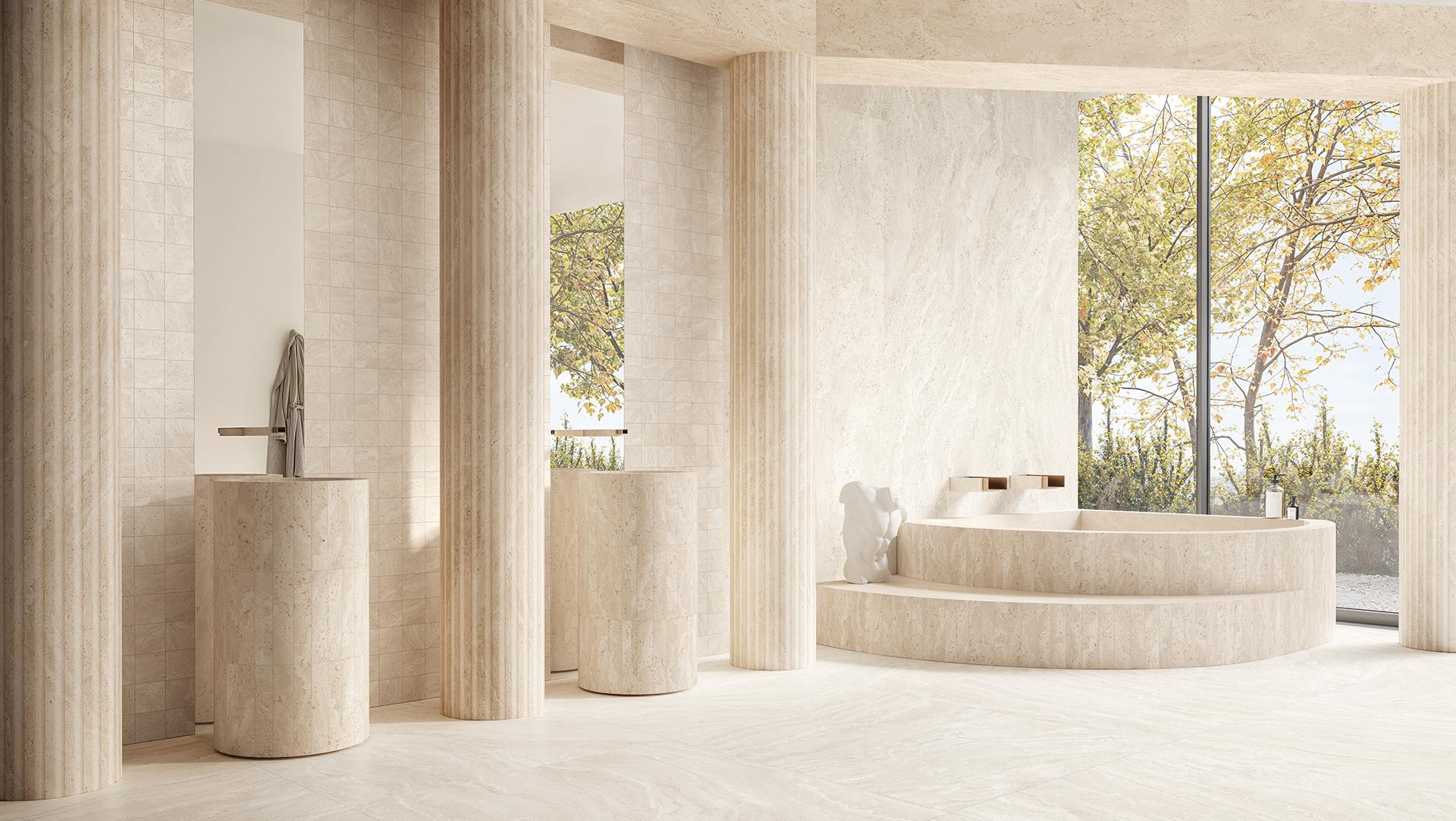
A curved surface is more than just an aesthetic choice; it is an architectural element that enhances how a space is perceived. Thanks to the interplay of light and shadow flowing along its profiles, sinuous lines harmonize an environment, providing depth and a sense of natural movement without cluttering the decor.
How to tile curved geometries with innovative materials
Covering curvilinear shapes requires meticulous planning to ensure visual continuity. The goal is to avoid harsh breaks or awkward cuts that disrupt the fluidity of the line.
The success of such a project depends on three key variables:
- Radius of curvature: this defines the width of the curve and the transition between concave and convex profiles.
- Modular elements: to follow a curve harmoniously, narrow formats are often preferred. They adapt better to the perimeter while keeping the rhythm of the tiling legible.
- Design continuity (veining, direction, joints): pattern direction and precise joint placement must follow the shape to make the surface appear visually uniform.
To achieve stylistic consistency, fixed elements such as desks, reception fronts, and counters can be clad in the same porcelain stoneware used for the flooring, creating a cohesive architectural language.
Using porcelain stoneware for columns and curved counters
Porcelain stoneware is the material of choice for tiling curved surfaces in high-traffic environments like hotels, bars, and restaurants. It combines exceptional technical performance with hyper-realistic aesthetics that replicate stone, wood, and metal.
Furthermore, the nature of ceramics allows for the creation of coverings that convey a sense of continuous volumes and high-impact surfaces. However, the result always depends on careful engineering: the quality of the substrate, precision of the cuts, joint management and attention to finishing details are what define a truly professional installation.
Curved wall coverings: technical solutions for every project
To achieve a professional result with porcelain stoneware slabs, technical details must be handled with care:
- Substrate stability: the base must be perfectly even to prevent tension in the material.
- Joint planning: essential for managing thermal expansion and following the modular cadence of the curve.
- Edge management: edges and terminals are the most delicate points. A state-of-the-art finish defines the overall value of the work.
Generally, wider curves allow for smoother visual continuity and showcase the material better. Conversely, tight curves risk an uneven look with more visible micro-breaks and cuts. In these cases, a modular approach is used, building a repetitive rhythm that remains consistent with the shape.
Bar counter cladding: techniques and materials for complex shapes
In bars and restaurants, the counter is often the first point of contact. Cladding it with a tactile, luminous surface helps define the brand’s style and elevates the space. In this context, Dual Travertine by Emilceramica offers a modern reinterpretation of travertine. This collection balances naturalness and warmth, visually expanding the space while providing a solid, durable surface.
Hotel reception design: the aesthetic impact of curved surfaces
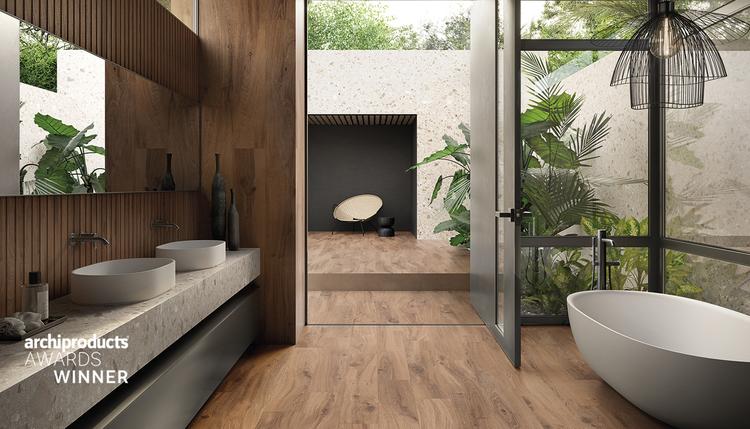
A reception desk is the calling card of any hospitality structure. A curved porcelain covering with a wood effect, such as the I-Wood collection by Ergon, combines visual warmth, design continuity and performance tailored for high-traffic areas. The collection interprets oak with a realistic, contemporary finish designed to create comfortable environments. The texture remains perceptible to the touch, adding a layer of authenticity.
Thanks to its various formats, I-Wood is suitable for covering different surfaces and volumes, from corridors and lounge areas to desks and reception fronts, maintaining a clean, modern look perfect for minimalist yet welcoming projects.
Flexible solutions for curves: professional installation and maintenance
To achieve a precise and lasting result, tiling curved surfaces on walls or furniture must be designed with appropriate solutions. Beyond material choice, success depends on a stable substrate, correct joint design, edge protection, and coordination with other details like lighting, skirting, and technical elements.
In commercial settings, maintenance must also be straightforward. Surfaces that withstand frequent cleaning and finishes consistent with actual usage help preserve the aesthetic over time.
Superior quality curved coverings for commercial spaces
Choosing a high-quality curved covering means investing in aesthetics, durability and performance for busy spaces. Emilgroup offers collections capable of interpreting different textures with the solidity and practicality of ceramics.
Explore our range of porcelain stoneware tiles on our website and choose the textures and finishes best suited to your project.
Collections used in the project





Any Questions?
If you are looking for the ideal covering for your home or business or you have any questions about our collections, don’t hesitate to get in touch! Together we’ll find your perfect bespoke solution!
If you are looking for the ideal covering for your home or business or you have any questions about our collections, don’t hesitate to get in touch! Together we’ll find your perfect bespoke solution!
Enter the Emilgroup world!
Stay up to date with the latest news from the world of ceramics. Find out about our new collections, events and innovative applications of porcelain stoneware.