

Ventilated facades in porcelain stoneware: efficiency and design
10 dicembre 2025
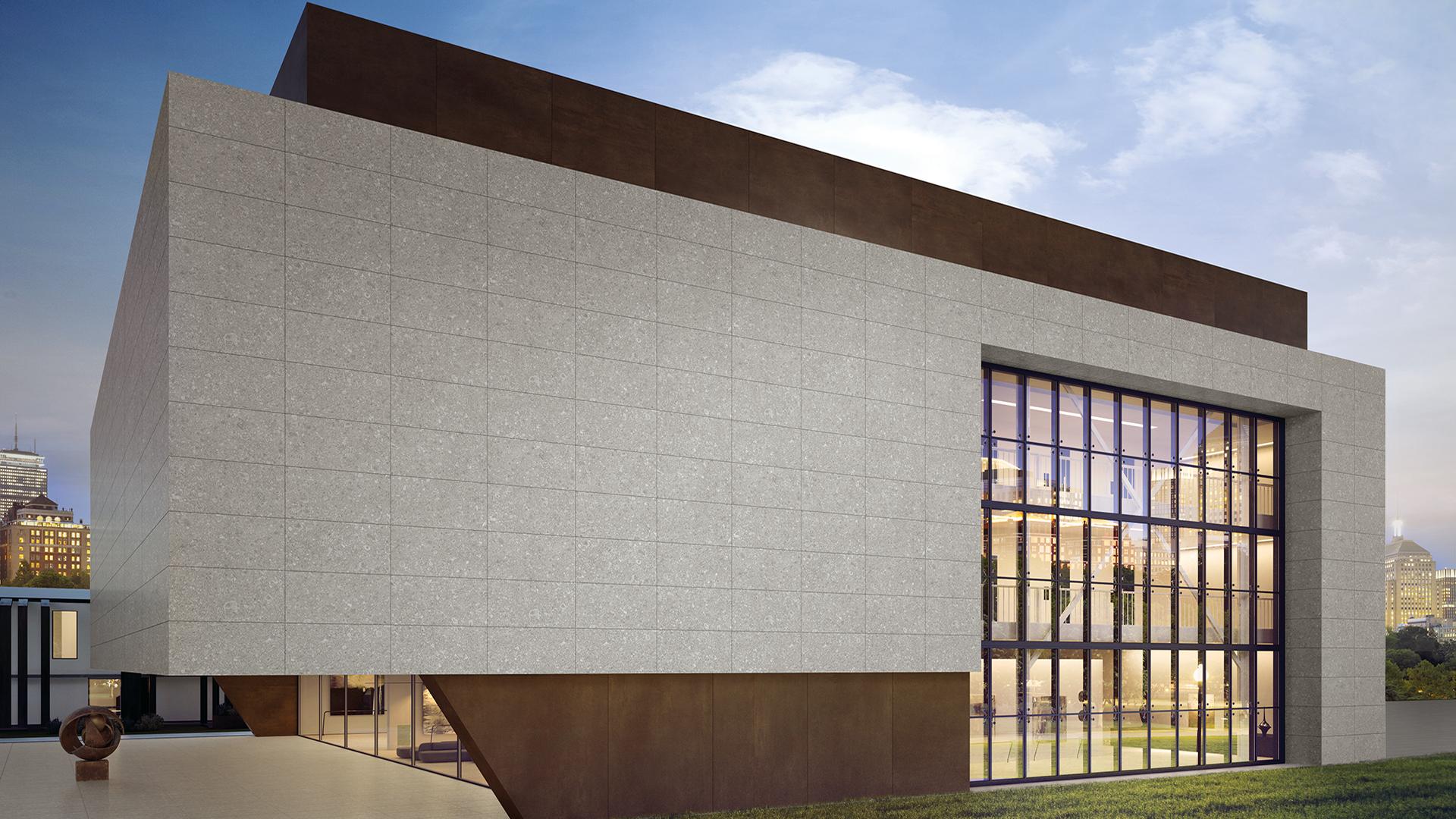
Ventilated facades in porcelain stoneware represent one of the most appreciated solutions in contemporary architecture. This innovative system combines energy efficiency, comfort, and aesthetic customization freedom. The available finishes and textures allow for the creation of unique exteriors, integrated with the environment, ensuring resistance and durability. In an era focused on sustainability, ventilated facades in porcelain are a cutting-edge choice.
What is a ventilated facade and how does it work?
A ventilated facade is an external cladding system that combines technical functionality and aesthetics, enhancing the building's architecture. It involves the dry application of panels, without direct adhesion to the outer wall, but with an air gap in between that allows for natural airflow.
This air gap is part of a structure made up of four layers: an insulating layer applied to the external masonry for thermal insulation, a metal supporting structure, the external cladding (often in porcelain stoneware), and the ventilated space between the support and cladding.
The continuous air flow created helps to regulate the internal temperature, to reduce humidity, and to improve indoor comfort, while also ensuring energy savings.
Why choose porcelain stoneware for a ventilated facade?
Porcelain stoneware is an ideal material for cladding external facades due to its resistance and durability. It withstands weather conditions, retains its aesthetic properties over time, and, thanks to its smooth and impermeable surface, does not absorb moisture, making it suitable for rain and thermal fluctuations.
Perfect for those seeking modern and versatile aesthetic solutions, porcelain stoneware is available in a wide range of finishes, colors, and textures, replicating natural materials like stone, wood, and concrete, adapting to various architectural styles.
Its non-porous surface prevents the accumulation of dirt, reducing the need for complex maintenance. Over time, it represents a wise investment due to its longevity and ease of upkeep.
Moreover, the lightness of porcelain stoneware is ideal for facades, as it reduces the load on the structure. It also guarantees mechanical resistance, withstanding wind and structural stress. In addition to resisting impacts and scratches, it helps improve energy efficiency by maintaining comfortable indoor environments without compromising the building's aesthetics.
Advantages of porcelain stoneware ventilated facades
Choosing Emilgroup tiles for porcelain stoneware ventilated facades offers numerous benefits. In summer, ventilated facades create a continuous airflow between the outer wall and the insulating panel, keeping indoor temperatures cool and reducing heat influx from the outside. The tiles also reflect sunlight, thanks to their shading function that absorbs solar rays.
Even in winter, the ventilated facade remains effective: it allows the expulsion of water vapor from the interior to the exterior, reducing condensation formation and counteracting thermal leaks and infiltration.
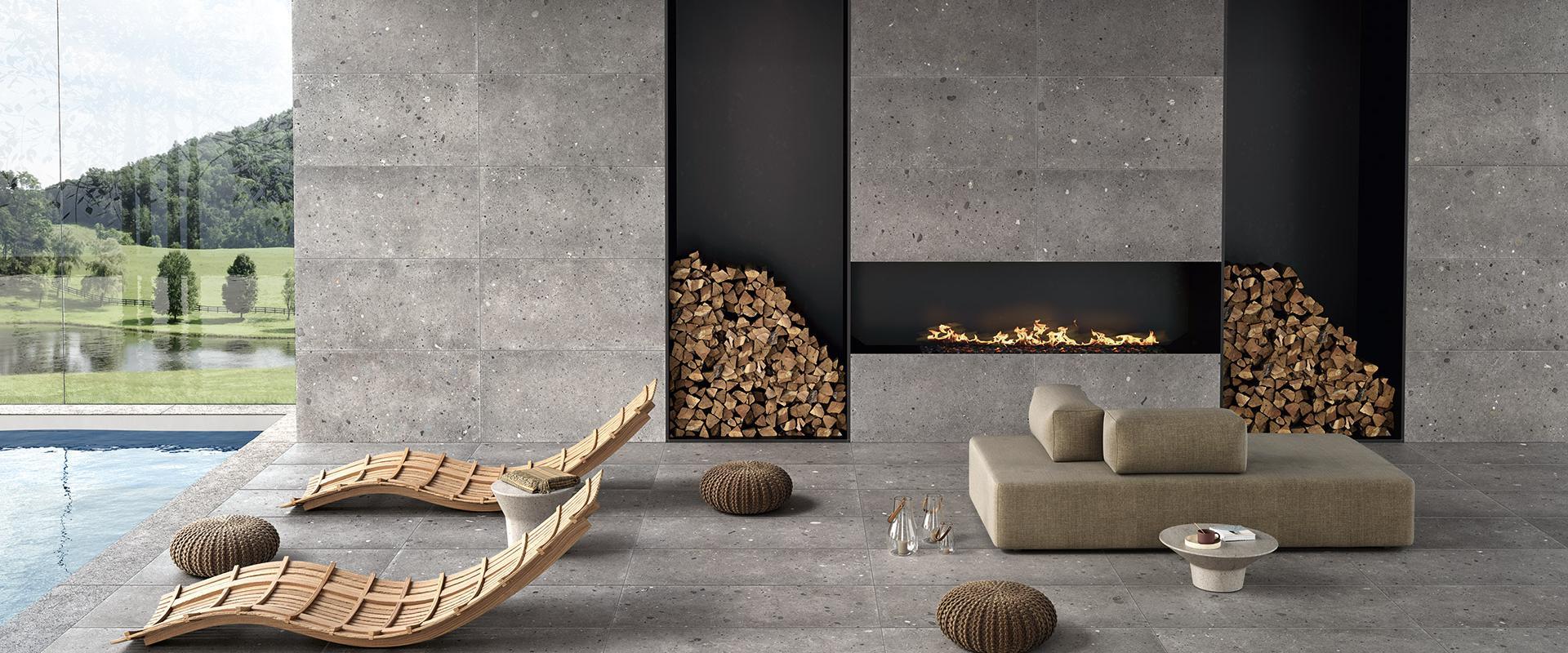
A significant example is Portland Stone by Ergon, a collection that reinterprets limestone, making it the focal point of projects where aesthetics and technique meet. For these reasons, these solutions are increasingly appreciated by architects and designers for cladding new buildings or commercial complexes like hotels and museums, as well as industrial buildings.
Styles and designs for porcelain stoneware ventilated facades
The wide range of finishes, colors, and textures offered allows for finding the ideal solution for every project or building. You can choose from a broad palette of colors, ranging from light tones like ash, sand, and mixed solutions to shades of gray and black, including dove gray.
Emilgroup tiles combine mechanical resistance, protection from frost, and thermal shock, making them the perfect choice for blending aesthetics, performance, and cost-efficiency.
Textures and finishes of porcelain stoneware for ventilated walls
The stone effect is one of the most popular choices for ventilated facades, as it faithfully replicates the appearance of natural materials and provides innovative solutions for contemporary architecture. The surfaces feature different treatments, such as Minimal, Hammered, and Rolled textures.
The selection of texture and color largely depends on the final effect desired and the specific needs of the project. Among the Emilgroup collections particularly suitable for facade cladding are Lombarda by Ergon and Stone Talk by Ergon, both inspired by the materiality of stone for a primordial effect, yet with a significant visual impact.
Applications and design examples of porcelain stoneware ventilated facades
Porcelain stoneware ventilated facades are ideal for residential and commercial buildings, new constructions, or renovation projects. An example is Lombarda by Ergon, used in a renovation in Alicante. The stone effect chosen recalls Milanese architecture from the 20th century, combining elegance with innovation.
Stone Talk by Ergon was also successfully applied in a project that clad an entire building, demonstrating how technique, design, and innovation can harmoniously integrate. The Rolled finish of this collection helped enhance the constructed work with a textured surface that expresses authenticity and modernity.
Visit the dedicated page for ventilated facades on the Emilgroup website to explore all the collections and the potential of this system. Each proposal is designed to combine design, innovation, and performance, meeting the needs of the most ambitious projects.
Collections used in the project


Related Articles


Any Questions?
If you are looking for the ideal covering for your home or business or you have any questions about our collections, don’t hesitate to get in touch! Together we’ll find your perfect bespoke solution!
If you are looking for the ideal covering for your home or business or you have any questions about our collections, don’t hesitate to get in touch! Together we’ll find your perfect bespoke solution!
Enter the Emilgroup world!
Stay up to date with the latest news from the world of ceramics. Find out about our new collections, events and innovative applications of porcelain stoneware.