
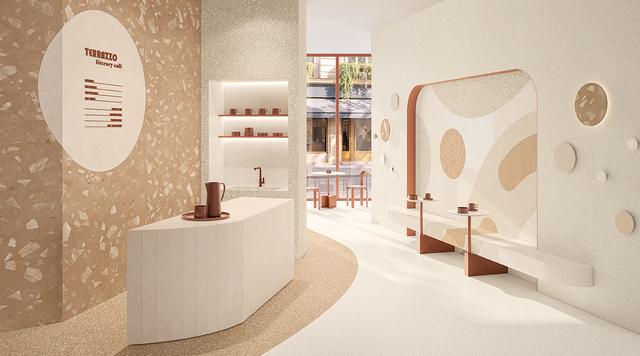
How to furnish a small kitchen: porcelain stoneware solutions to make the most of every centimetre
02 ottobre 2026
A small kitchen deserves the same design attention as a large one, but requires a few specific strategies to show it off to its best advantage.
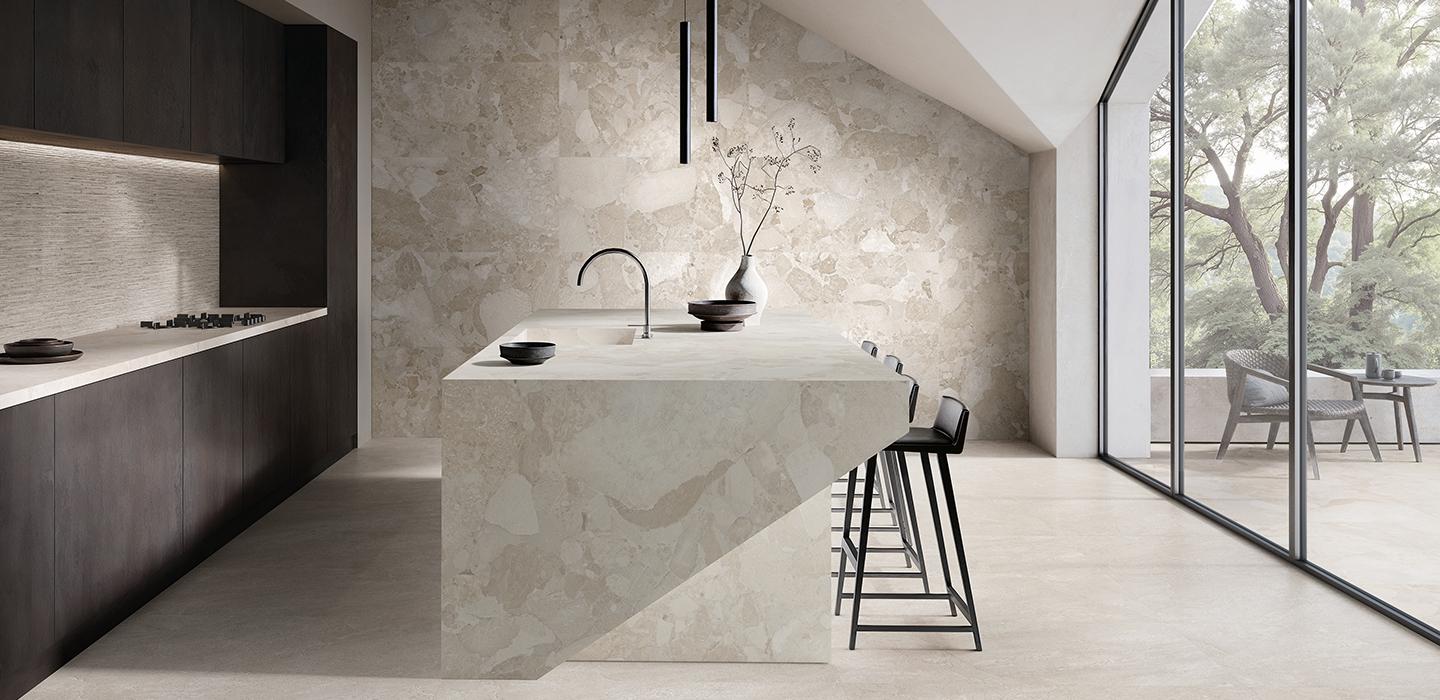
To make a small kitchen appear larger, three material choices are key: large-format tiles that minimise the number of grout lines, a palette of light neutral tones, and the use of the same porcelain stoneware across the floor, splashback and worktop.
How to make a small kitchen look bigger: the 3 design principles
There are three design principles:
- Material continuity: using the same material for the floor, wall cladding and worktop enhances the perception of space.
- Minimising visual interruptions: the fewer the boundaries between one surface and another, the less the eye perceives the room’s limits.
- Verticality: a full-height splashback elongates the wall and draws the eye upwards.
Large-format tiles or small tiles: which to choose
It is often thought that small tiles should be used in a small kitchen. In reality, this is not the case: large-format tiles reduce the number of grout lines and create a seamless surface.
Furthermore, this also means less dirt build-up, which directly benefits the kitchen’s hygiene.
Which colours to choose for a small kitchen
The colour scheme depends on personal taste and the surrounding décor, but certain colours and textural effects can help make the room appear more spacious. Here’s how to choose porcelain stoneware tiles for a small kitchen.
Light neutral tones are the best choice: they reflect light and make the room brighter and, consequently, more spacious.
Marble and stone effects work well because the light veining on a neutral background adds depth and movement without geometric patterns that would disrupt the visual continuity. The Unique Travertine collection draws inspiration from travertine craftsmanship and combines simplicity and sophistication in a single surface, with a wide colour range to complement existing furniture.
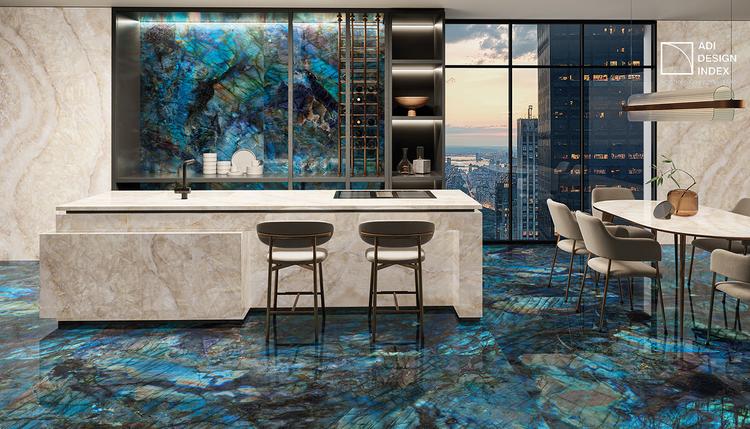
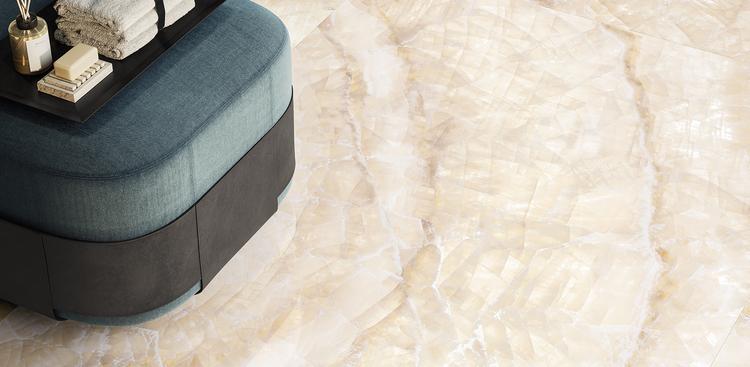
Tele di Marmo Lumia, on the other hand, captures the lustre of precious stones in slabs with a striking visual impact, capable of drawing in light and enhancing even the smallest kitchen.
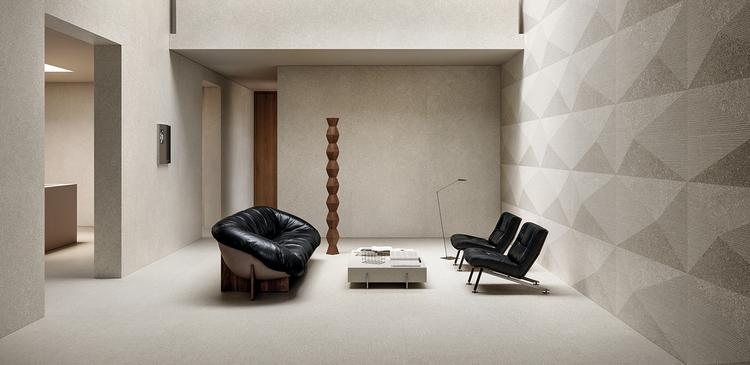
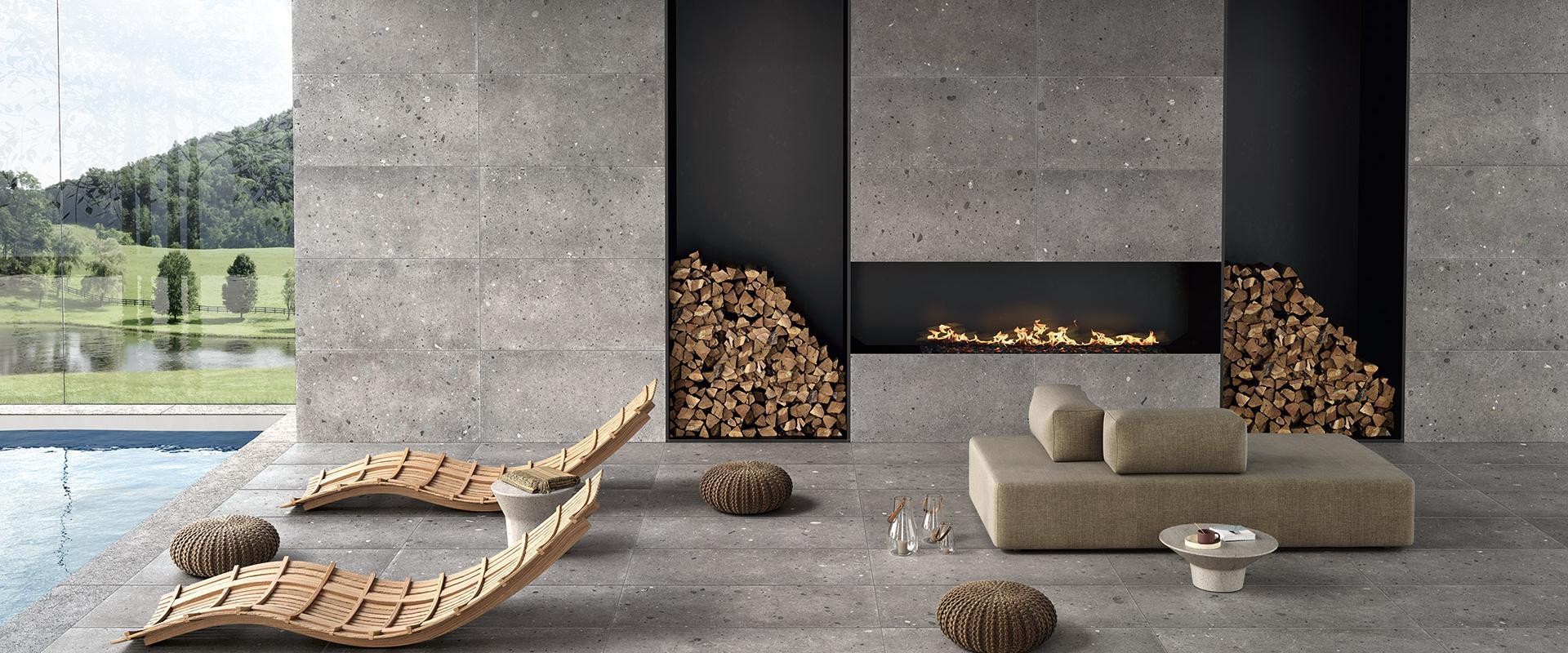
Finally, the finish. The lapped finish reflects light and makes the space feel larger; the natural finish offers a softer texture and is even easier to maintain. The Matera Stone collection, in its Natural version, combines a luminous surface with the textural beauty of stone.
Stoneware tops and splashbacks: a single, continuous surface
Let’s now look at how to choose the most suitable worktop and splashback.
- A seamless surface with no joints between the worktop and splashback: this eliminates points where water, grease and bacteria can seep in, particularly behind the sink and hob – the areas that are most difficult to clean.
- Reduced thickness: a thin porcelain stoneware worktop weighs less, both technically and visually. This is a significant advantage when every element needs to be carefully sized.
- Food contact and certifications: porcelain stoneware is non-porous, so it does not absorb liquids or harbour bacteria. For this reason, it can obtain certifications confirming its suitability for food contact.
- Heat and stain resistance: it does not warp or discolour when in contact with hot pans or acidic substances such as lemon or wine, and does not require additional protection near the hob.
Which table to choose for a small kitchen
In a small kitchen, there are three solutions that work well, listed in ascending order of space required:
- A round or square table with a stoneware top: the absence of sharp corners keeps the space uncluttered and allows four people to sit comfortably, even if the table is less than a metre in diameter.
- An extendable table: compact for everyday use, to be extended only when more seats are needed.
- A peninsula extending from the worktop: the best choice when the layout allows the worktop to be extended, as it combines the cooking and dining areas without adding an extra piece of furniture.
The stoneware worktop is a common feature of all three solutions: thin, non-porous and resistant to hot dishes. Part of the same collection as the worktop, it integrates the table rather than fragmenting the space.
A small, rectangular kitchen or one that opens onto the living room
Depending on the shape and orientation of the kitchen, the way the tiles are laid can help create visual balance. If the grout lines run along the longest axis of the room, the eye follows that direction and the space appears less cramped.
Conversely, when you wish to maintain continuity between the kitchen and living room whilst still indicating a separation, a change in the tile finish acts as a boundary without the need for physical walls – perfect when the space is too small for actual partitions.
Frequently Asked Questions
How can you make the most of a small kitchen?
Material continuity across surfaces, large formats and light colours: when applied together, these three principles make the space appear more spacious.
Can the same stoneware be used for the floor, worktop and splashback?
Yes, the same collection can be used across all three surfaces to ensure continuity of colour and texture, with different thicknesses and finishes depending on the intended use.
Collections used in the project





Related Articles


Any Questions?
If you are looking for the ideal covering for your home or business or you have any questions about our collections, don’t hesitate to get in touch! Together we’ll find your perfect bespoke solution!
If you are looking for the ideal covering for your home or business or you have any questions about our collections, don’t hesitate to get in touch! Together we’ll find your perfect bespoke solution!
Enter the Emilgroup world!
Stay up to date with the latest news from the world of ceramics. Find out about our new collections, events and innovative applications of porcelain stoneware.